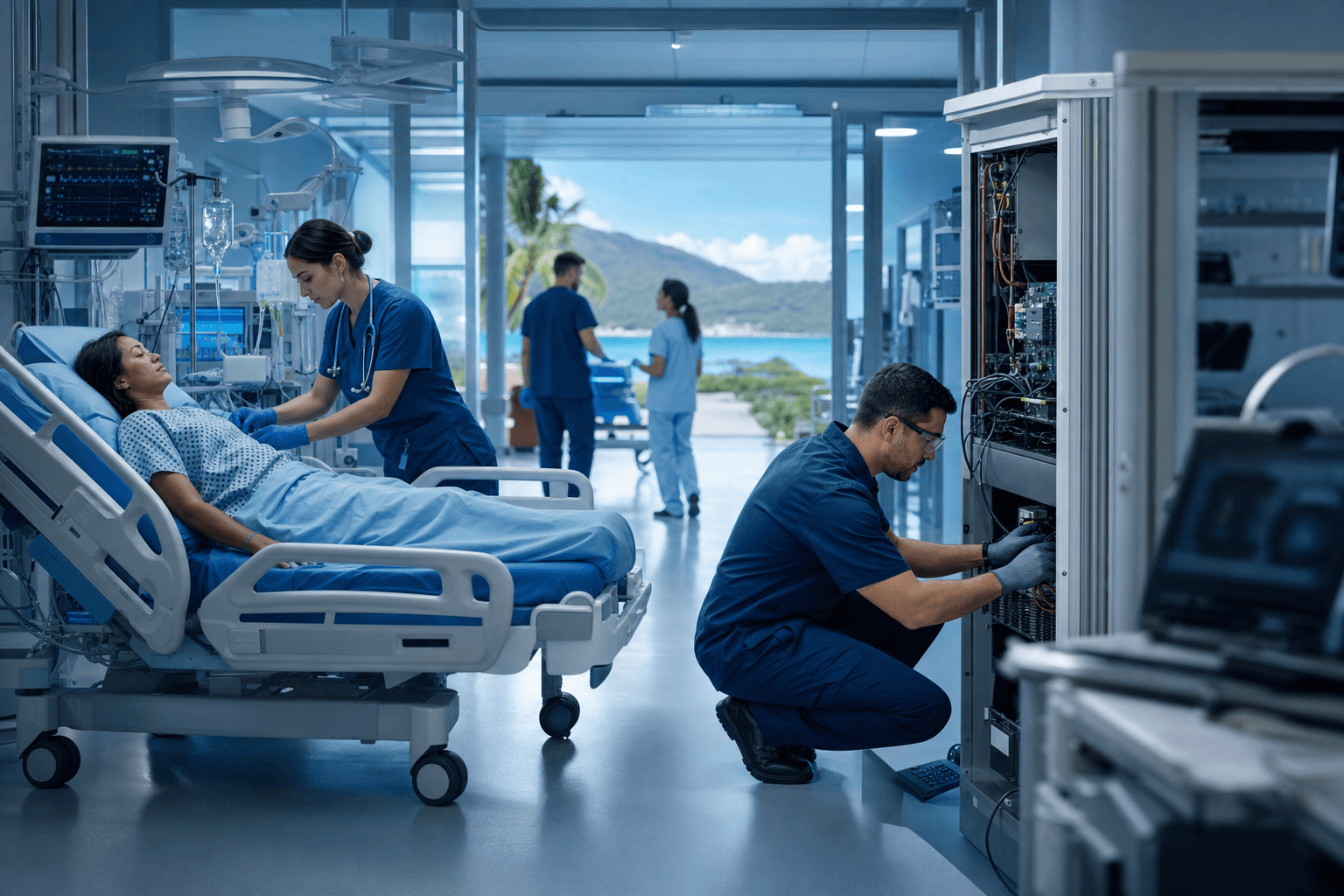
Choosing an Anesthesia Workstation for Mauritian Theatres: A Procurement Checklist
10 June 2026 · By Medtech
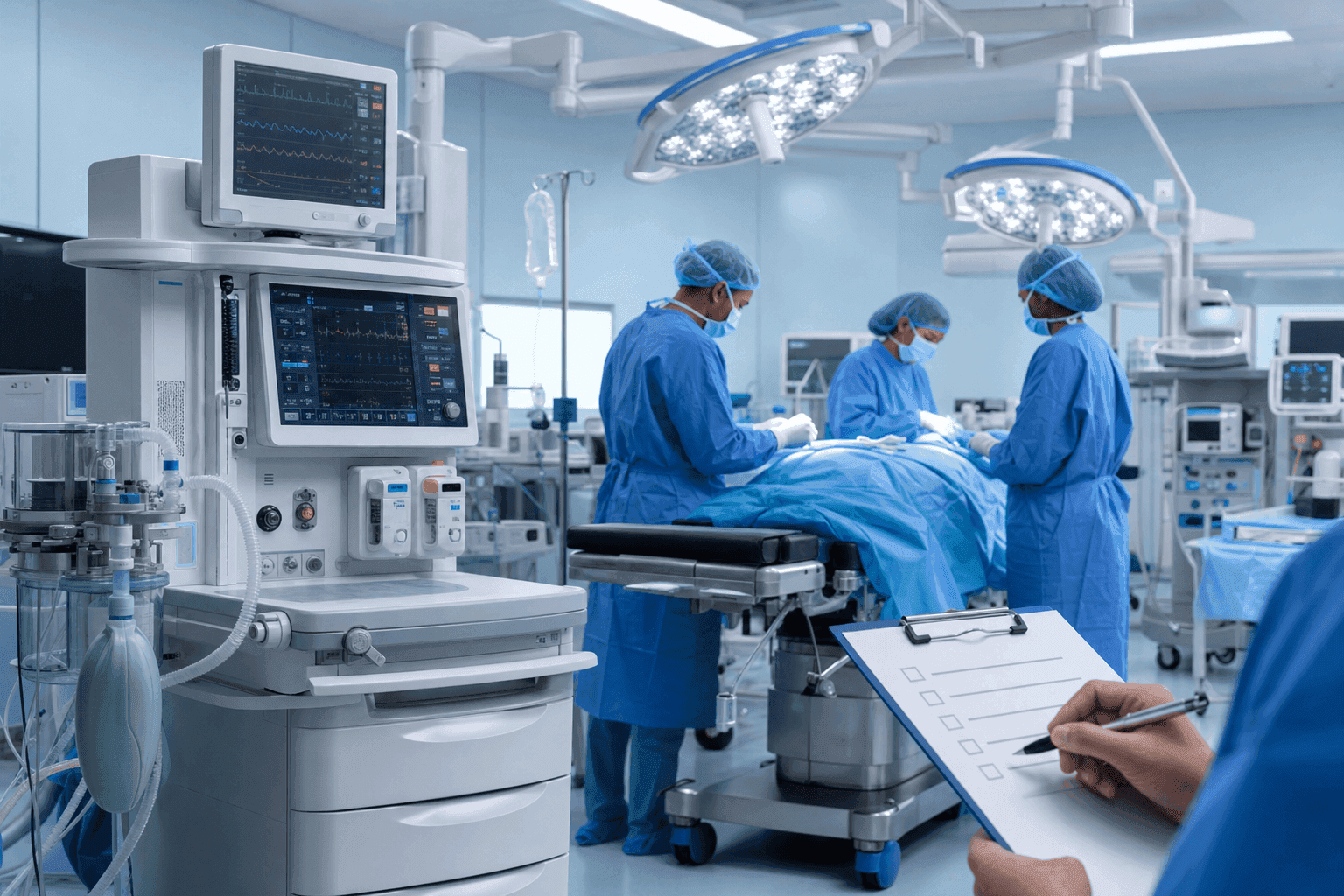
An anesthesia workstation anchors every operating list your theatre runs, every working day, for ten years or more. It is also one of the few capital purchases where the quality of local service matters as much as the quality of the machine. On an island, a workstation that waits three weeks for a valve is not a workstation, it is furniture.
We install and maintain Draeger anesthesia platforms across Mauritius, and Draeger recognised that work with its Outstanding Channel Partner award in 2023. This checklist condenses what our biomedical engineers and clinical support team look for when they help hospitals specify a new machine. Use it on any supplier, including us.
Start with your case mix, not the brochure
Specification meetings drift toward feature lists. Resist that. Begin with the cases your theatres actually run and the ones you plan to add.
- Do you anaesthetise children, and down to what weight?
- How many long cases run each week where low-flow technique saves meaningful agent volume?
- Do you need the same platform in obstetric, general and day-case theatres, or different tiers for different rooms?
- Will the machine ever move between rooms, and do your doorways, power points and gas outlets allow it?
The answers decide which ventilation package, vaporiser configuration and monitoring options belong in your tender, and which are money spent on menus nobody will open.
Ventilation performance is the heart of the machine
Modes that earn their place
Volume controlled and pressure controlled ventilation are table stakes. Ask harder questions. How well does the ventilator support a spontaneously breathing patient on a laryngeal mask? Does pressure support come with a reliable apnoea backup? How does it perform at small tidal volumes if paediatric lists are part of your future? A workstation that ventilates to the standard of an ICU ventilator gives your anaesthetists fewer reasons to compromise during long or difficult cases.
Low flow as an operating policy
Modern platforms make low-flow and minimal-flow anesthesia practical and measurable. That reduces agent consumption, workplace exposure and cost per case across the machine's life. Ask whether the workstation reports fresh gas and agent usage in a form your department can audit, because a saving you cannot measure is a saving that fades.
Gas management across the whole suite
The workstation is one node in a gas system. Walk the chain: pipeline supply, cylinder backup, scavenging, and the gas management installation serving the suite. Then ask each supplier three things. How does the machine behave during a pipeline pressure failure? How quickly and clearly does it alarm? Who on the island can service both the workstation and the gas infrastructure it depends on? We supply and support both layers, which shortens the argument about where a fault sits.
Monitoring integration and data flow
Decide early whether patient monitoring will live on the workstation, beside it, or both. Consistency matters: when theatre and ICU share a monitoring philosophy and alarm logic, handovers get safer and training gets shorter. If your hospital is moving toward electronic records, ask how the workstation exports case data today, not in a promised update. Integration you cannot demonstrate at tender stage rarely improves after payment.
Consumables are part of the purchase
Breathing circuits, absorbents, masks, sampling lines and filters will pass through that machine every day of its working life. Confirm that compatible consumables are stocked locally and reliably before you commit to a platform. Our consignment inventory service holds agreed stock on your premises, monitored and replenished by us, and you pay only for what you use. For a busy theatre suite, that converts a recurring procurement chore into a background process.
Lifetime service cost, asked out loud
The purchase price is only the visible fraction of a workstation's cost. Before you sign, put the whole service story in writing:
- Preventive maintenance intervals, and exactly what each visit includes
- Which components are lifed items, and when each falls due
- The software update policy for the life of the platform
- Battery, flow sensor and oxygen cell replacement cycles
- Availability of a loaner machine during major service
Ask for the full service schedule across a ten year horizon. A supplier who cannot produce one is asking you to buy blind.
The Indian Ocean spare parts question
Every procurement team in Mauritius, Seychelles or Madagascar has lived the freight problem: the machine is fine, the part is in Europe. Ask where critical spares physically sit, who holds them, and what the supplier's committed response time is for a theatre-down fault. Our Technical Excellence team is based in Mauritius, factory trained on the platforms we sell, and backed by locally held spares for the installed base we support. Distance is a fact of island medicine. Downtime is a choice made at contract stage.
A simple maintenance contract framework
We recommend matching the contract tier to theatre criticality:
- Preventive: scheduled maintenance and safety testing only. Suits low-volume rooms with an accessible backup machine.
- Preventive plus corrective: adds defined response times for faults and priority access to spares. The sensible default for most surgical departments.
- Full cover: adds parts, labour and a loaner commitment so a single failure never cancels a list. Justified for high-volume and emergency theatres.
Whichever tier you choose, insist that response targets and escalation paths are written into the contract, not implied in a conversation.
Ten questions to put to any supplier
- Which hospitals in the region run this platform today, and may we speak with them?
- Who services the machine, and where are they based?
- What is the committed response time for a theatre-down fault?
- Which spare parts are held in Mauritius?
- What does the ten year maintenance schedule look like, itemised?
- How does the machine behave in a pipeline failure?
- How does case data leave the machine, and in what format?
- What training is included for anaesthetists, technicians and biomedical staff?
- Is a loaner machine available during major repairs?
- What is the end-of-life and trade-in pathway?
A credible supplier answers all ten without hesitation. The tenth answer tells you whether they plan to be here in fifteen years.
See the platforms in context
Our Anesthesia and ICU portfolio covers workstations, ventilation, monitoring and gas management, with installation, training and in-theatre support part of the conversation from day one.
Ready to specify? Talk to our team through the contact page and we will help you build a tender that protects your uptime for the next decade.
Over 30 years advancing healthcare in Mauritius, Seychelles and Madagascar. Explore the wider Chemtech Group health ecosystem.